

What Integration Actually Is (And Why Westerners Need It)
What indigenous traditions have always known about transformative experiences — and what Westerners need to build from scratch.

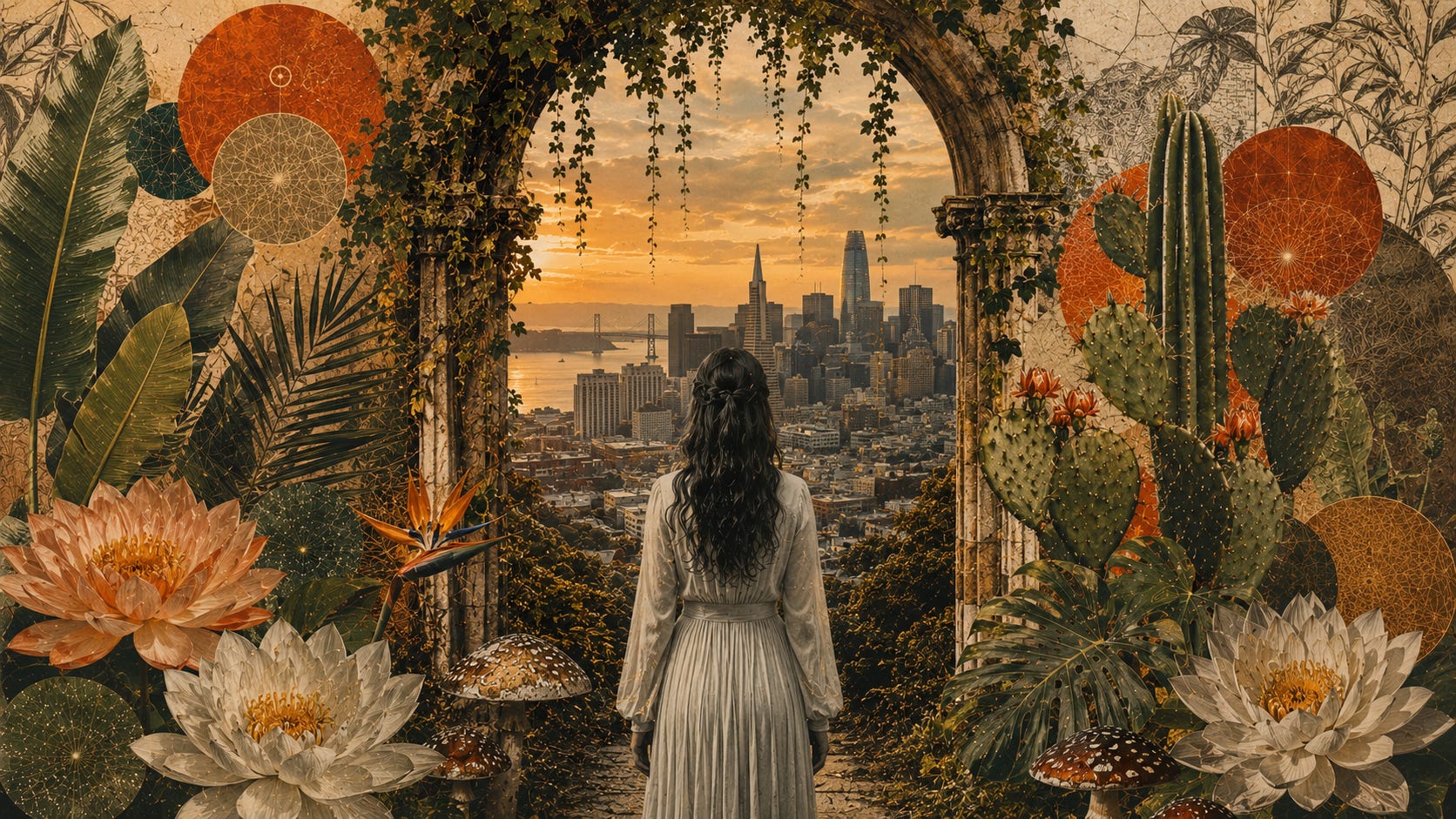
Integration is one of those words that gets used a lot in psychedelic spaces. So before anything else: integration is the process of safely returning from a transformative experience, making meaning from what arose, and then translating it into lasting change. It is what happens between the experience and the rest of your life.
It is, in many ways, the whole point of having a transformative experience.
The word itself comes from the Latin integratus — to make whole, to complete. In Jungian terms, this maps onto individuation: the lifelong process of becoming a more coherent, centered self by bringing unconscious material into conscious awareness. Our shadows, emotions, unmet desires and unprocessed experiences don’t disappear because we ignore them. They surface in our decisions and behaviors, often without us realizing it. Integration is how we begin to recognize and relate to these parts of ourselves with awareness, rather than being blindly driven by them.
A transformative experience can accelerate this process — bringing things to the surface rapidly, in ways that ordinary life rarely does. And that is why what happens after matters so much.
Most people don’t integrate. Not really. A few journal entries, maybe a therapy session, a conversation with a friend who was also at the retreat. And then: back to ordinary life, carrying something that hasn’t yet found its place.
Why integration wasn’t always a word that was needed
Across cultures and across centuries, traditions that worked with transformative experiences built the same thing: a container. Not just for the experience itself, but for what came before and after it.
In the Shipibo tradition of the Peruvian Amazon, participants follow a dieta before an ayahuasca ceremony: a period of dietary restriction, silence, and deliberate withdrawal from ordinary life that can last days or weeks. It’s the beginning of the container. During ceremony, the curandero sings icaros: songs received through direct transmission from the plant spirits — active instruments of healing and navigation, facilitating the work of the ceremony itself. After the ceremony, the community continues to hold the participant. There is no abrupt return to ordinary life, because ordinary life was never the container to begin with.
The Mazatec tradition — which gave the world psilocybin mushrooms — embeds their use within ceremony, cosmology, and community. Peyote ceremonies in the Native American Church last through the night and into the morning, held within a structure of prayer, song, and communal witnessing. The Eleusinian Mysteries of ancient Greece lasted nine days: ritual purification, fasting, a fourteen-mile procession on foot from Athens to Eleusis, communal ceremony, and a deliberate return to ordinary life. Hindu pilgrimage traditions, Sufi initiatory rites, Buddhist retreat structures — all of them built the same architecture, in different forms.
In these traditions, there is no word for integration, because there doesn’t need to be. The container is already there. The experience and what surrounds it are one continuous process.
What happens when you remove the container
Something changed as these practices traveled across time and into modern Western contexts. The medicine moved — but the container, largely, did not.
What most of us encounter today is a version of these experiences that has been separated from the surrounding structure. A retreat for a weekend. A ceremony with strangers. A guided session in a clinical setting, or a solo experience at home. And then: a flight back, a Monday morning, a full inbox, a life that does not know you went somewhere and came back changed.
Part of what made the original containers so effective was that they also prepared people to receive the experience. Ancient traditions understood that you cannot go directly from ordinary life into something that dissolves your ordinary sense of self, and expect it to land cleanly. There was a process of emptying first: of the mind, the body, the habitual patterns of daily existence. The dieta. The fasting. The procession. The separation from ordinary life before the threshold was crossed.
Most of us skip this entirely. We go from work and email and deadlines directly into a ceremony, and then straight back. And then we wonder why the experience hasn’t fully taken root.
This is what happens when a practice travels without its container. The experience is real. The opening is real. What is missing is the structure that always surrounded it, before and after. Preparation and integration.
That is what integration needs to be for Westerners: a consciously built container that does for us what culture, community, and tradition did automatically in its original context. Not a supplement to the experience, but the missing half of it.
What integration actually requires
Clinical research on psychedelic-assisted therapy consistently organizes treatment around three phases: preparation before the experience, support during it, and a dedicated post-experience integration phase. This isn’t a therapeutic invention, but a formalization of what countless other traditions built into their containers by design.
What the post-experience phase actually includes, when done well, is broader than most people expect:
Somatic practice. Insights don’t only live in the mind. They need to land in the body. Movement, breathwork, and embodied practices help the nervous system process and consolidate what the experience opened. An insight held only in the head tends to stay there.
Therapeutic dialogue. Being witnessed matters. Talking with someone who can hold what you bring — a therapist, integration coach, or practitioner — helps the experience move from your interior into relational reality. This is where meaning becomes language, and language becomes something you can act on. A sharing circle can offer the same function: communal witnessing has been central to integration in traditional contexts, and remains as relevant now.
Sound. Intentional sound and music during and after experiences is increasingly recognized as a meaningful element of both ceremony and integration, not an aesthetic add-on. Indigenous traditions understood this long before Western research began to formalize it.
Community. Many traditions that work with transformative experiences hold participants in community before, during, and after — particularly in the return phase. Most Westerners integrate alone. The difference matters.
Time. Real integration is not a weekend. Enduring changes in self-perception, emotional regulation, and how you show up in relationships take root across weeks, and sometimes months. The experience opens the door. Integration is the practice of walking through it, returning to what arose, and letting it reshape your life over time.
Building the container
Many non-Western traditions — Amazonian, Mesoamerican, Greek, Native American, and others — built the container into their culture so thoroughly that no one had to think about it separately. Preparation, ceremony, community, return: one continuous process, held by structure that was never meant to be optional.
As Westerners, we have to think about it separately. That is the situation we find ourselves in — because we are working without the cultural scaffolding that was always supposed to hold this work.
Integration as a conscious practice is a modern problem. It’s an ancient solution that got left behind. Every tradition that worked with transformative experiences understood that the experience itself was not the end. It was the beginning of a process that required preparation, witnessing, time, and a deliberate return.
If you’re figuring out what that looks like in practice, numinous is built for this — a structured program designed around all three phases, from preparation before your experience through the weeks of integration that follow, with therapeutic audio and professional support. You can learn more at numinous.life.
If someone in your life has recently had a transformative experience and is trying to make sense of it — send this article to them. The container is what makes the difference.